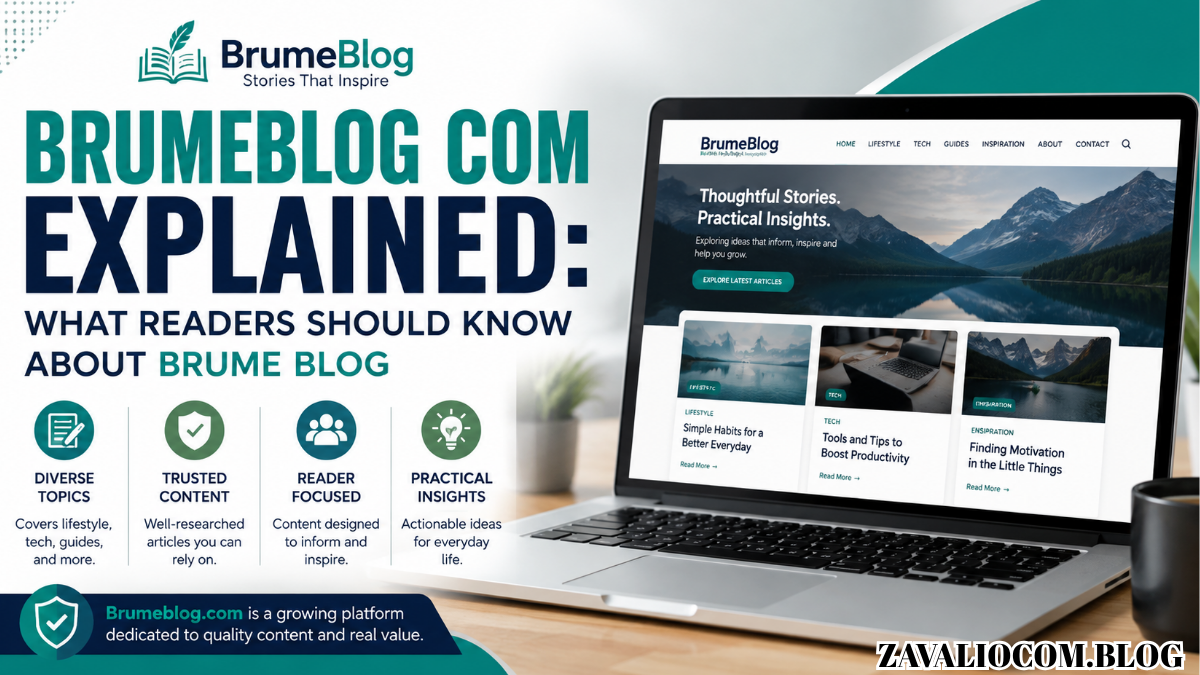
Brumeblog com Explained: What Readers Should Know About Brume Blog
Finding a useful article online is easy. Finding a website you want to return to is much harder.
That distinction matters when looking at brumeblog com, a general-interest publishing website covering subjects that range from business and technology to health, law, finance, travel, real estate, pets, gaming, and everyday lifestyle topics. The site functions less like a narrowly focused personal blog and more like a digital magazine where readers can jump between unrelated subjects depending on what they need at the moment.
That broad approach has an obvious advantage: variety. It also creates a responsibility for readers. Advice about choosing a pet product does not require the same level of verification as an article discussing workplace injury law, health care, investing, or consumer rights.
So rather than simply asking what Brume Blog publishes, it makes more sense to look at how the site is organized, what kind of reader it serves, and how to decide which information deserves additional verification.
What Is Brumeblog com?
Brume Blog is a multi-topic content website organized much like an online magazine. Its visible category structure includes AI, Business, Crypto, Education, Fashion, Finance, Game, Health, Home, Law, Lifestyle, Online Game, Pets, Real Estate, Technology, Trading, Travel, Websites, and additional general blog content.
That tells you something important immediately: the site’s identity is built around breadth rather than specialization.
A visitor might arrive after searching for information about artificial intelligence, read an article concerning legal separation, and later click into a travel or home-related post. That is quite different from visiting a publication devoted exclusively to personal finance, health, cybersecurity, or another specialist subject.
The website itself describes its offering as a collection of magazine-style content spanning areas such as fashion, lifestyle, entertainment, technology, business, and sports.
For the average reader, the simplest description is probably the most accurate: Brume Blog is a general-interest information site designed around searchable articles on many different subjects.
What Kind of Articles Are Actually Published There?
Looking at a site’s category labels only tells half the story. Recent headlines provide a better picture of what readers will actually encounter.
The homepage has featured articles dealing with changing move-in dates and teaching children to use artificial intelligence safely. Its recent-post listings have also included subjects such as unknown phone numbers, felony versus misdemeanor distinctions, legal separation versus divorce, workplace injury compensation, and consumer rights involving new apps in Arkansas.
That mix reveals an interesting editorial direction.
This is not simply a lifestyle blog publishing recipes, fashion pieces, and entertainment news. Some articles address practical problems with consequences in the real world. A person searching after receiving calls from an unfamiliar number has a specific problem to solve. Someone researching workplace injury compensation may be making decisions involving thousands of dollars.
That changes how the content should be used.
For low-stakes topics, a clear general article may be everything you need. For high-stakes subjects, it should usually be the beginning of your research rather than the end.
The Biggest Strength Is Also the Main Limitation
Multi-category blogs are convenient because readers do not need ten bookmarks for ten different interests. One domain can cover homeownership on Monday, technology on Tuesday, and travel on Wednesday.
The downside is expertise.
A specialist tax publication can build its entire editorial operation around tax law. A cybersecurity publication can focus its writers, editors, sources, and testing procedures on security. A broad magazine has to spread its attention across dozens of subjects.
That does not automatically make general-interest content unreliable. It means you should adjust your expectations based on the topic.
Imagine three articles:
- tips for preparing your home before moving;
- a comparison of two productivity apps;
- guidance about compensation after a workplace injury.
The first might require little external verification. For the second, you would ideally check current pricing and features on the developers’ official websites. For the third, relying on one general article would be a mistake because state law, deadlines, employment status, insurance arrangements, and the specific facts of an accident can all change the answer.
That distinction is something many generic “website reviews” miss.
How I Would Use Brume Blog as a Reader
The best way to use a multi-topic publication is for orientation and discovery.
Suppose you know almost nothing about legal separation. A readable overview can teach you the vocabulary, explain the broad distinction from divorce, and show you which questions deserve deeper research.
Or imagine your child has started experimenting with generative AI. A general parenting article could give you ideas for discussing privacy, misinformation, school rules, and responsible AI use. You could then verify technical or safety recommendations through authoritative sources.
This layered approach works better than expecting every article found through Google to function as a definitive reference.
Here is the habit I recommend: use general web content to understand the issue, then move closer to the original source as the consequences become more serious.
For a product feature, check the manufacturer’s documentation. For an Arkansas consumer-law question, look at relevant state or government resources. For medical treatment, use reputable health organizations and speak with a qualified professional when personal medical decisions are involved.
That extra five minutes of verification can be worth far more than reading five additional blog posts repeating the same claim.
Navigation Matters More Than People Think
A broad website can become frustrating quickly if topics are poorly organized. Brume Blog’s category-based structure helps solve that problem by separating major subjects rather than throwing every article into a single chronological feed.
This is especially helpful for readers arriving through search.
Someone may discover one finance article without realizing that the site contains material about technology, travel, real estate, health, and education as well. Category pages provide a straightforward route to related content.
I would still avoid browsing randomly if you have a specific research goal. Start from the article answering your question, identify useful terminology, then explore related category content only when it adds something new.
Otherwise, a multi-topic site can turn a two-minute search into twenty minutes of interesting but irrelevant reading.
Can You Trust Everything You Read There?
No website deserves automatic trust simply because it appears in search results, and Brume Blog should be evaluated using the same standards as any other publication.
Start with the article itself.
Look for a clear publication date, identifiable author information, specific claims rather than vague assertions, and references to authoritative sources when the subject demands them. Then consider how quickly the information could become outdated.
An article about the difference between a felony and misdemeanor may involve state-specific legal definitions. An investing article could contain numbers that change daily. AI product information from six months ago can already be obsolete. Even something as straightforward as app pricing can change from $9.99 per month to $14.99 without an old review being updated.
Those are not theoretical concerns. They are normal limitations of web publishing.
A useful article should help you understand something. A trustworthy research process requires you to know when understanding is not enough.
Be Especially Careful With Health, Finance, Law, and Crypto
The site’s broad category list includes several areas where inaccurate information can cost readers money or cause real harm, including Health, Finance, Law, Crypto, and Trading.
Content in these categories deserves a higher verification standard.
If you are reading about health, check claims against sources such as the FDA, CDC, major hospital systems, or established medical organizations.
For investing and securities topics, SEC and FINRA resources are more authoritative than a general blog article.
Legal questions are even more dependent on jurisdiction. Rules applicable in California may differ substantially from those in Texas or Florida. A worker in Chicago facing an employment dispute also should not assume a general explanation applies exactly to Illinois law.
This is where readers need to resist a common Google-search habit: treating the clearest answer as automatically the most authoritative answer.
Clarity is valuable. Authority is separate.
Why Sites Like Brume Blog Keep Appearing in Search
People rarely search the web by publication category anymore. They search problems.
“Why is an unknown number calling me?”
“What happens if my apartment isn’t ready on move-in day?”
“Felony vs misdemeanor difference.”
“How do I keep my kid safe using AI?”
A broad publication can address hundreds or thousands of those individual questions without being locked into one industry. That gives multi-topic websites considerable reach because each article can serve an entirely different search audience.
It also explains why somebody might encounter the same website repeatedly without ever deliberately visiting its homepage.
From a reader’s perspective, the brand may initially matter less than the usefulness of the article. Over time, consistency determines whether that changes.
What Makes an Article Worth Reading?
I judge informational content by a simple test: did I know what to do next after reading it?
An article about a delayed move-in date should not spend 1,500 words explaining that delays are stressful. It should tell the reader what to check in the lease, who to contact, what temporary arrangements may be necessary, and what documents to keep.
The same principle applies across every category.
Good technology writing explains the practical impact of a feature. Good travel content gives useful logistical details. Good financial education explains assumptions and risks rather than promising easy returns.
Readers should look for that level of usefulness on Brume Blog or any similar site.
If an article simply repeats the search query using different words, there is little reason to keep reading.
Is Brume Blog a News Website?
Not in the traditional sense.
Its visible structure looks much closer to an informational magazine or general blogging platform than a breaking-news newsroom. Articles span numerous evergreen and practical subjects rather than focusing primarily on rapid reporting of current events.
That distinction matters because readers should not assume every publication operates under the same editorial model.
If a major event happened at 11:00 a.m. and you need verified information at noon, established news organizations and primary official sources are usually the better first stop.
If you want a plain-English explainer about a subject that has been confusing you, a magazine-style blog may be perfectly suitable.
Is It Useful for U.S. Readers?
Much of the subject matter can be useful to American readers, particularly content involving home, business, consumer issues, technology, AI, real estate, and everyday lifestyle questions.
Some articles are explicitly U.S.-specific. The site’s recent-post listings, for example, have included consumer-rights content centered on Arkansas.
Still, American readers should watch closely for geographic context in legal, tax, insurance, employment, property, and health-related articles.
A statement that seems universally applicable may actually depend on state law or local rules.
If a legal article does not make jurisdiction clear, that is your signal to verify before acting.
The Difference Between Discovering Information and Depending on It
This is probably the most useful distinction to remember.
You can discover information from almost anywhere.
You should depend on information only after its reliability matches the importance of the decision you are making.
If Brume Blog introduces you to a useful software tool, there is little downside to exploring it.
If an article influences a $20,000 investment decision, a medical treatment choice, a lawsuit deadline, or the purchase of a $500,000 home, your research should go considerably further.
That is not criticism of one particular website. It is simply smart internet literacy.
Is Brume Blog a real website?
Yes. BrumeBlog.com is currently accessible and publishes articles across multiple categories, including business, technology, finance, health, law, lifestyle, travel, and real estate. Its homepage also displays recent and categorized posts.
what do people use BrumeBlog.com for?
Mostly for reading general informational and practical articles across different topics. Readers may arrive through search results looking for an answer to a specific question rather than visiting the site as a traditional magazine subscriber.
does Brume Blog only publish technology articles?
No. Technology is just one part of the site. Its category structure also includes Business, Education, Finance, Health, Home, Law, Lifestyle, Pets, Real Estate, Travel, Crypto, Trading, gaming-related categories, and others.
can I trust its health or financial advice?
Use it as general information, but verify important health and financial claims with authoritative specialist sources. Decisions involving medication, investments, taxes, legal rights, or substantial amounts of money deserve more than a single blog article.
is Brume Blog free to read?
The publicly indexed articles I reviewed are accessible through the website without an obvious paid subscription barrier. Because websites can change their access policies, readers should rely on the current site if they need to confirm availability for a particular article.
Brume Blog makes the most sense as a discovery-focused digital magazine: broad enough to answer questions across many areas and useful for getting oriented quickly. My approach would be simple—enjoy the convenience, judge each article on its own merits, and raise your verification standards whenever health, money, law, safety, or another high-stakes decision is involved.