Nevada Desert: Landscapes, Wildlife, and Unforgettable Adventures
The Nevada desert stretches across much of the Silver State like an open book of geological history and quiet resilience. From the high cold basins in the north to the warmer southern reaches near Las Vegas, this arid expanse shapes everything from daily weather to the plants and animals that call it home. Visitors often arrive expecting endless sand, yet they quickly discover a far richer world of mountain ranges, dry lake beds, colorful rock formations, and surprising pockets of life. The landscape feels both ancient and alive at the same time, inviting slow exploration rather than rushed sightseeing.
Many travelers first encounter these dry lands on a road trip from California or Utah and find themselves pulled deeper by the sense of space. Wide valleys sit between parallel mountain ranges in classic basin-and-range fashion, a pattern that defines so much of the region. Sunrises paint the rocks in soft pinks and oranges while nights bring a canopy of stars rarely seen in more populated places. Understanding this environment begins with recognizing that the Nevada desert is not a single uniform place but a collection of related ecosystems shaped by elevation, latitude, and the powerful rain shadow of the Sierra Nevada. This guide walks through its geography, climate, living communities, outdoor opportunities, and practical advice so you can experience it with greater appreciation and safety.
Understanding the Geography of These Arid Lands
Nevada sits almost entirely within the Basin and Range Province, where the Earth’s crust has stretched and broken into long north-south mountain ranges separated by broad valleys. Most of the state drains internally, meaning water that falls rarely reaches the ocean and instead evaporates or sinks into the ground. This creates the closed basins that give the Great Basin its name. Southern portions transition into the Mojave, where elevations drop and temperatures climb. The result is a complex mosaic rather than a flat empty plain.
Elevation plays a starring role in shaping local conditions. Valleys often sit between three thousand and five thousand feet, while peaks rise well above ten thousand feet. Boundary Peak on the California border reaches over thirteen thousand feet, and Wheeler Peak in Great Basin National Park stands nearly as high. These height differences create dramatic shifts in temperature and plant life over short distances. A drive of only a few miles can move you from creosote flats into pinyon-juniper woodlands and eventually into cooler forested slopes. The overall dryness stems from the Sierra Nevada blocking Pacific moisture, leaving Nevada as the driest state in the country on average.
Ancient lakes once filled many of these basins during wetter periods of the Pleistocene. Remnants of Lake Lahontan appear today as dry playas and salt flats, including the famous Black Rock Desert. Wind and occasional flash floods continue to reshape the surface, carving canyons and depositing alluvial fans at the base of mountains. These geological processes remain active, giving the terrain a sense of ongoing change even in places that look still at first glance. Standing on a high overlook and looking across multiple parallel ranges helps convey the true scale of this landscape and why it feels so expansive under open skies.
Climate Patterns and What Visitors Should Expect
Temperature extremes define daily life across the Nevada desert. Summers bring intense heat in lower southern areas, with daytime readings frequently climbing past one hundred degrees Fahrenheit near Las Vegas. Higher northern basins stay somewhat cooler yet still dry and sunny. Nights cool rapidly everywhere because of the clear air and low humidity, producing swings of thirty to forty degrees or more between afternoon highs and early morning lows. Winters deliver cold air and occasional snow, especially above four thousand feet, while southern valleys remain milder though still capable of freezing nights.
Precipitation stays low across most of the region, averaging under ten inches annually in many spots and far less in the driest southeastern corners. Winter storms provide most of the moisture in the form of rain or snow, while summer monsoons can deliver brief intense thunderstorms that trigger flash floods in dry washes. Wind often becomes a constant companion, especially across open valleys where it can raise dust and lower the perceived temperature. These patterns create a climate of contrasts that rewards careful planning. Carrying extra layers, sun protection, and plenty of water becomes second nature for anyone spending time outdoors.
Elevation strongly influences local weather. Higher mountain ranges intercept more moisture and support forests that feel almost alpine, while surrounding valleys remain arid. This vertical diversity means a single day trip can include both desert heat and cooler shaded trails. Climate change has begun shifting some patterns, with longer drought periods and warmer overall temperatures affecting water availability and plant stress. Still, the fundamental character of hot days, cold nights, and sparse rain continues to define the experience for residents and visitors alike. Checking forecasts before any outing remains essential because conditions can change quickly in these open spaces.
The Remarkable Plant Life That Thrives Here
Plants of the Nevada desert have evolved remarkable strategies for surviving limited water and extreme temperatures. Sagebrush dominates vast northern and central valleys, forming the iconic gray-green sea that stretches to the horizon. Its aromatic leaves and deep roots allow it to endure long dry spells while providing habitat and food for numerous animals. In southern areas the creosote bush takes center stage, often growing in evenly spaced patterns that reflect competition for scarce resources. Its distinctive scent after rain signals the arrival of moisture to anyone who knows the land.
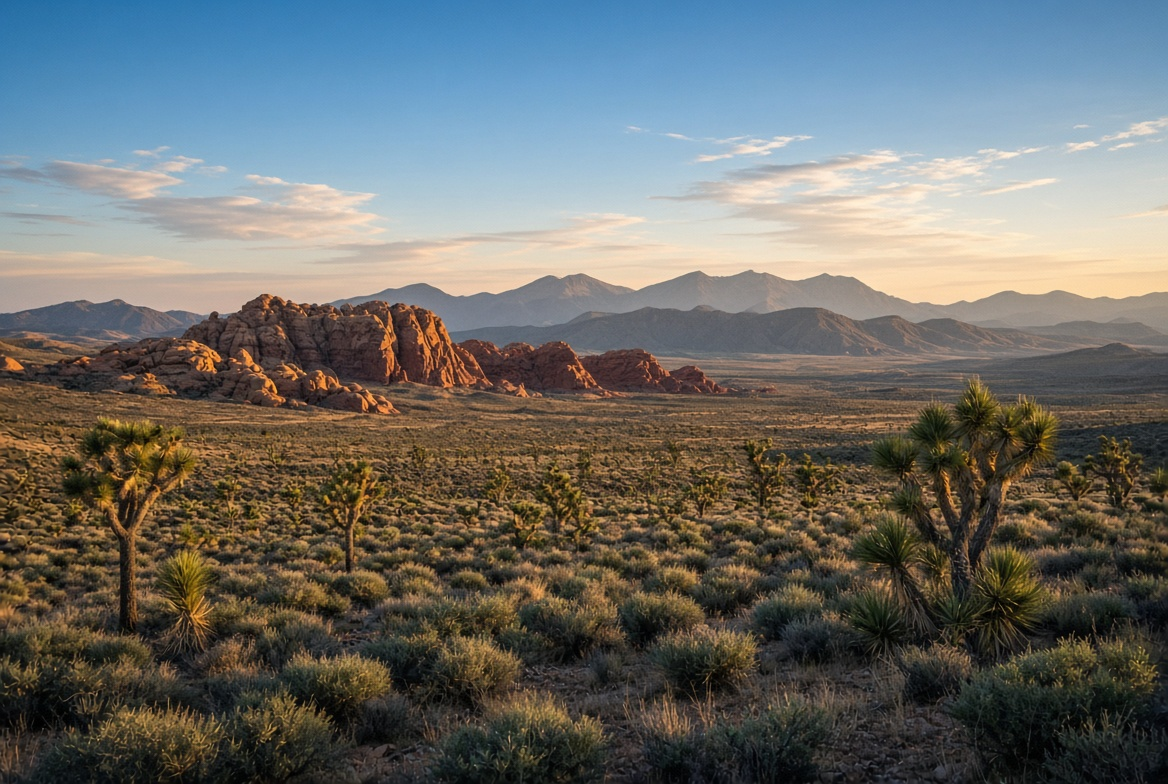
Joshua trees mark the transition zones between the hotter Mojave and cooler Great Basin regions, their strange branching forms standing like sentinels on alluvial fans. Yuccas, cacti of many shapes, and brittlebush add texture and occasional bursts of color after spring rains. Higher elevations support pinyon pine and juniper woodlands that produce edible nuts and create more shaded microclimates. Bristlecone pines grow in the highest rocky slopes of certain ranges, some individuals living for thousands of years and ranking among the oldest living trees on Earth. Their twisted forms tell stories of survival through centuries of harsh conditions.
Wildflowers appear in surprising abundance after wet winters, transforming barren-looking ground into carpets of yellow, purple, and white. These brief displays attract insects and delight photographers, yet they remain unpredictable from year to year. Many plants complete their entire life cycle quickly, germinating, blooming, and setting seed before the soil dries completely. Others store water in fleshy tissues or shed leaves during the harshest periods. This diversity of adaptations creates a living tapestry that rewards close observation and patience. Learning to identify a few common species quickly deepens any visit and reveals how much activity exists even in places that first appear empty.
Animals Adapted to Extreme Conditions
Wildlife in the Nevada desert shows equally impressive adaptations to heat, cold, and scarcity. Desert bighorn sheep climb steep rocky slopes with ease, their sure footing and ability to go without water for extended periods making them iconic symbols of the region. Mule deer and pronghorn move across open valleys, while coyotes and bobcats fill the roles of adaptable predators. Smaller mammals such as jackrabbits, ground squirrels, and kangaroo rats remain active mostly at night or in the cooler hours, conserving energy and moisture.
Reptiles thrive in the warmth, including various lizards, the desert tortoise, and rattlesnakes that seek shelter during the hottest parts of the day. Birds range from roadrunners and quail near the ground to soaring raptors that take advantage of thermal currents. Migratory species pass through in season, adding temporary richness to the permanent residents. Insects and arachnids form the foundation of many food webs, with some species specialized to particular plants or soil conditions. Observing these animals requires quiet patience and often early morning or evening timing when activity peaks.
Many species depend on the scattered water sources that exist in springs, seeps, and intermittent streams. These oases become gathering points that support higher densities of life and offer excellent viewing opportunities for careful observers. Human development and climate pressures have affected some populations, particularly the desert tortoise, which faces habitat loss and other challenges. Conservation programs work to protect key areas and restore connectivity so animals can move across the landscape as they always have. Encountering a herd of bighorn on a remote ridge or watching a tortoise move slowly across a wash remains one of the lasting memories many visitors take home from time spent in these open spaces.
Great Basin and Mojave Regions Compared
The Nevada desert encompasses two primary ecological zones that differ in elevation, temperature, and dominant plants. The Great Basin covers the larger northern and central portions and qualifies as a cold desert because of its snowy winters and higher average elevations. Sagebrush and shadscale dominate the valleys while pinyon-juniper woodlands climb the slopes. Summers still grow hot, yet the overall feel remains more temperate than the southern counterpart.
The Mojave occupies the southern third of the state and presents a warmer, lower landscape with creosote bush, Joshua trees, and more pronounced summer heat. Las Vegas sits within this zone, surrounded by dramatic red rock country and open valleys. The boundary between the two shifts gradually and often follows elevation and latitude, creating interesting transition areas where both plant communities appear. Understanding these differences helps travelers choose destinations that match their preferred conditions and interests.
Both regions share the basin-and-range topography and the influence of the Sierra Nevada rain shadow, yet their distinct climates produce different experiences. Higher Great Basin areas offer cooler summer hiking and winter snow possibilities, while Mojave locations deliver classic hot desert scenery and milder winter days. Exploring both sides of the state reveals the full range of what the arid lands of Nevada can offer and highlights how elevation and location create such varied environments within a relatively compact geographic area.
Here is a simple comparison of key features:
| Feature | Great Basin Desert in Nevada | Mojave Desert in Nevada |
|---|---|---|
| Climate | Cold desert with snowy winters | Hotter desert with warmer lowlands |
| Elevation | Generally higher valleys and peaks | Often lower basins |
| Dominant Plants | Sagebrush, shadscale, pinyon-juniper | Creosote, Joshua tree, blackbrush |
| Typical Feel | Quiet, broad, cooler nights | Warm, dramatic, classic Southwest |
| Notable Places | Great Basin National Park, Black Rock Desert | Valley of Fire, Red Rock Canyon, Desert National Wildlife Refuge |
Standout Parks and Protected Areas
Great Basin National Park protects a remarkable slice of high country that includes ancient bristlecone pines, alpine lakes, and the spectacular Lehman Caves. The Wheeler Peak Scenic Drive climbs through changing life zones and offers access to trails that reach some of the oldest living trees on the planet. Night skies here rank among the darkest in the country, making the park a premier destination for stargazing. Visitors often comment on the sense of solitude that still exists even during busier seasons.
Valley of Fire State Park near Las Vegas showcases brilliant red sandstone formations carved into arches, windows, and balanced rocks. Petroglyphs left by earlier inhabitants add cultural depth to the striking geology. Short trails wind among the formations and provide easy access for photographers and families. Red Rock Canyon National Conservation Area sits even closer to the city and features a scenic loop drive, climbing routes, and hiking trails through colorful cliffs and desert washes. Both places demonstrate how the southern Nevada desert can deliver dramatic scenery within a short drive of urban amenities.
The Desert National Wildlife Refuge spans more than one and a half million acres and protects critical habitat for desert bighorn sheep along with many other species. Its size and remoteness create true wilderness conditions where visitors can experience vast open spaces with minimal development. Gold Butte National Monument and other recent designations continue to expand the network of protected lands that safeguard unique geological and biological features. Each of these areas rewards different styles of exploration, from easy scenic drives to multi-day backpacking trips into remote canyons.
Hiking Trails and Outdoor Exploration
Hiking remains one of the most rewarding ways to experience the Nevada desert at a human pace. Trails range from short interpretive walks near visitor centers to challenging routes that climb steep ridges or follow remote washes. In Red Rock Canyon the Calico Tanks Trail leads to a natural water pocket and panoramic views, while longer routes explore deeper canyons. Great Basin National Park offers everything from easy lakeside strolls to strenuous approaches of Wheeler Peak.
Many trails follow old mining roads or natural drainages that reveal changing plant communities as elevation increases. Carrying adequate water, sun protection, and navigation tools proves essential because cell service often disappears and temperatures can climb rapidly. Early starts help avoid the hottest hours and increase chances of seeing wildlife. Side trails and informal routes exist in many public land areas, yet sticking to established paths protects fragile soils and cryptobiotic crusts that take decades to recover from disturbance.
Beyond formal trails, the open terrain invites cross-country travel for experienced hikers comfortable with map and compass or GPS skills. Wide valleys allow long views while mountain slopes provide elevation gain and cooler air. Seasonal considerations matter greatly. Spring and fall generally offer the most comfortable temperatures, while summer requires careful timing and winter may bring snow at higher elevations. Whatever the chosen route, the combination of solitude, scenery, and physical challenge makes hiking in these lands particularly memorable.
Camping Under Wide Open Skies
Camping in the Nevada desert delivers an unmatched sense of immersion. Designated campgrounds in parks and recreation areas provide basic facilities and convenient access to trails and viewpoints. Many sites sit among pinyon and juniper or near interesting rock formations that glow at sunset. Dispersed camping on Bureau of Land Management lands opens even more possibilities for those seeking greater solitude. Vast stretches of public land allow visitors to find their own quiet corner with nothing but open sky overhead.
Stargazing reaches extraordinary quality in many locations because of low light pollution and clear air. The Milky Way stretches across the heavens on moonless nights, and meteor showers become spectacular events. Bringing a good sleeping bag rated for cool temperatures proves wise because nights chill quickly even after hot days. Fire restrictions often apply, so checking current regulations and packing a stove becomes standard practice. Leave-no-trace principles take on special importance in these fragile environments where vegetation grows slowly and soils erode easily.
Seasonal timing affects both comfort and availability. Spring and fall fill popular campgrounds quickly, while summer heat and winter cold thin the crowds. Higher elevation sites stay cooler during warmer months and may remain accessible longer into the season. Many campers combine stays with day hikes or scenic drives, creating flexible itineraries that adapt to weather and energy levels. The simplicity of waking to desert light and falling asleep under countless stars creates lasting memories that urban camping rarely matches.
Cultural History and Human Connections
People have lived in and traveled through the Nevada desert for thousands of years. Indigenous communities developed deep knowledge of water sources, plant uses, and seasonal movements that allowed them to thrive in an environment that outsiders often viewed as harsh. Petroglyphs and other cultural sites still mark the landscape in places such as Valley of Fire and Gold Butte, offering quiet reminders of long human presence. Later arrivals included explorers, miners, ranchers, and eventually modern travelers seeking recreation or simply passage.
Mining booms left ghost towns and scattered relics that tell stories of sudden prosperity and equally rapid decline. Ranching continues in some valleys where water and forage support livestock. Military use and testing have also shaped portions of the landscape, particularly in more remote areas. Today the balance between development, recreation, and conservation remains an ongoing conversation. Understanding this layered history enriches any visit by connecting the visible scenery to the people who have interacted with it across centuries.
Modern communities range from small rural towns to the bright lights of Las Vegas, which sits squarely within the Mojave portion of the region. The contrast between urban energy and surrounding open space creates unique opportunities for day trips that leave the city behind within minutes. Respectful visitation includes staying on established roads and trails near sensitive cultural sites and packing out everything brought in. These practices help ensure that future generations can experience the same sense of discovery that draws people to these lands today.
Conservation Challenges and Ongoing Efforts
Protecting the Nevada desert involves addressing multiple pressures including urban growth, off-highway vehicle use, invasive species, and changing climate conditions. Habitat fragmentation affects animals that need large areas to find food and mates, while groundwater pumping and surface water diversions alter the sparse natural water sources. Invasive plants such as cheatgrass can increase fire frequency and alter native plant communities in ways that prove difficult to reverse.
Organizations and agencies work on habitat restoration, species monitoring, and land designation that provide stronger protections. National wildlife refuges, conservation areas, and wilderness designations safeguard core habitats while still allowing compatible recreation. Citizen science programs and volunteer efforts contribute valuable data and on-the-ground help. Education remains a key component because informed visitors tend to treat the land more carefully and support policies that maintain its health.
Success stories include recovering populations of certain species in protected areas and the establishment of new monuments that recognize both natural and cultural values. Challenges persist, particularly around balancing renewable energy development with habitat needs and managing increasing visitation. Supporting responsible recreation, learning about local ecosystems, and advocating for science-based management all contribute to keeping these landscapes resilient. The long-term health of the region depends on continued attention and care from both residents and those who visit.
Practical Advice for Planning a Visit
Successful trips begin with realistic expectations about distances, services, and conditions. Many areas lie far from gas stations, grocery stores, and medical facilities, so filling the tank and packing extra supplies becomes routine. A sturdy vehicle with good tires handles most maintained dirt roads, though high-clearance or four-wheel-drive capability opens additional routes. Checking road conditions before departure prevents unwelcome surprises after storms or during winter.
Clothing choices should emphasize sun protection, breathable fabrics, and layers for temperature swings. Sturdy footwear protects against rocks and cactus, while a wide-brimmed hat and sunglasses reduce glare. Water needs exceed what many people initially estimate, especially during physical activity in heat. A general guideline of at least one gallon per person per day provides a starting point that increases with exertion and temperature. Electrolyte supplements help maintain balance during longer outings.
Navigation tools including paper maps, a compass, and offline digital maps provide redundancy when signals fade. Sharing trip plans with someone outside the group adds a safety margin. Seasonal awareness guides clothing, gear, and destination choices. Spring offers wildflowers and moderate temperatures in many areas, fall brings clear skies and cooler days, while summer demands early starts and careful heat management. Winter can deliver solitude and snow at higher elevations for those prepared for cold. With thoughtful preparation the Nevada desert becomes an accessible and deeply rewarding destination rather than an intimidating one.
Frequently Asked Questions
What makes the Nevada desert unique compared to other American deserts?
The combination of cold Great Basin and warmer Mojave environments within one state creates unusual diversity of elevation, climate, and plant communities. Parallel mountain ranges and closed basins produce distinctive scenery and internal drainage patterns not found everywhere. Ancient bristlecone pines, extensive sagebrush seas, and dramatic red rock areas further set the region apart. The proximity of major cities to true wilderness also allows easy access that many other desert regions lack.
When is the best season to experience the Nevada desert?
Spring and fall generally provide the most comfortable temperatures for outdoor activities across most elevations. Wildflower displays after wet winters make spring particularly appealing in lower areas, while autumn delivers clear skies and cooler hiking conditions. Summer works well for higher elevation destinations that stay more moderate, though lowland heat requires careful planning. Winter offers solitude and possible snow recreation at mountain sites for those equipped for cold weather.
Are there good opportunities for wildlife viewing?
Yes, patient observers find many chances to see desert-adapted animals. Early morning and late afternoon increase success rates for spotting bighorn sheep, mule deer, and various birds. Refuges and parks protect concentrated habitats that support higher densities of life. Quiet movement, binoculars, and knowledge of preferred habitats improve results. Always maintain respectful distances and avoid disturbing animals, especially during sensitive seasons such as nesting or lambing periods.
How should first-time visitors prepare for the conditions?
Focus first on water, sun protection, and temperature management. Carry more water than seems necessary and drink regularly rather than waiting for thirst. Wear layered clothing, a hat, and sunscreen, and plan activities around the coolest parts of the day during warmer months. Research specific destinations for current road and weather information, and let someone know your itinerary. Starting with established parks and scenic drives builds confidence before venturing into more remote areas.
Can families with children enjoy the Nevada desert safely?
Many parks and recreation areas offer short trails, interpretive exhibits, and scenic drives that work well for families. Valley of Fire and Red Rock Canyon provide accessible experiences close to services. Supervision remains important near cliffs, wildlife, and during temperature extremes. Packing snacks, extra water, and engaging activities such as scavenger hunts for interesting rocks or plants helps keep younger visitors involved. Choosing destinations with facilities and moderate lengths of time outdoors creates positive introductions to the landscape.
Is dispersed camping allowed and practical?
Dispersed camping is widely available on many public lands managed by the Bureau of Land Management, provided visitors follow leave-no-trace principles and any posted restrictions. Selecting previously used sites reduces impact, and packing out all waste including human waste in some sensitive areas protects the environment. Checking current fire regulations and weather forecasts before settling in prevents problems. The reward of true solitude under dark skies makes the extra preparation worthwhile for many campers.
Conclusion
The Nevada desert rewards those who approach it with curiosity and respect. Its vast spaces, resilient living communities, and dramatic geology offer experiences that range from quiet contemplation to active adventure. Whether standing among ancient bristlecone pines, watching light play across red sandstone, or simply driving across an open valley under endless sky, the landscape leaves a lasting impression. Understanding its climate, ecology, and history deepens every visit and encourages careful stewardship so that these arid lands continue to inspire future travelers. The open horizons and clear nights wait for anyone ready to explore them thoughtfully.