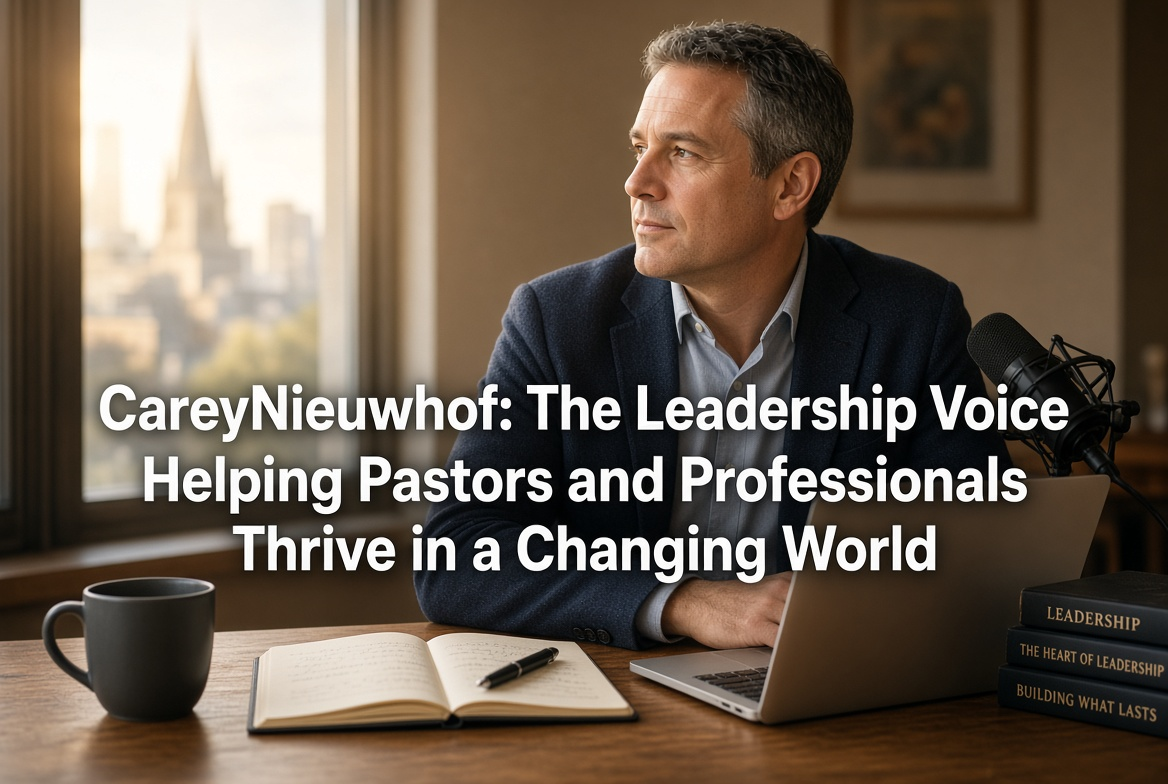
Carey Nieuwhof: The Leadership Voice Helping Pastors and Professionals Thrive in a Changing World
Carey Nieuwhof stands out as one of the most practical and trusted voices in modern leadership, especially for those navigating the unique pressures of church ministry and organizational growth. From his early days as a lawyer to becoming the founding pastor of a growing multi-site church and later a full-time author, speaker, and podcaster, his path has been marked by real struggles and hard-won wisdom. What makes his message resonate so deeply is how openly he shares the messy parts of leadership, including a severe burnout that nearly ended his ministry career. Today, hundreds of thousands of leaders turn to his blog, podcast, books, and academy every month for clear strategies on managing time, energy, priorities, team culture, and the disruptions that keep coming.
His work feels personal because it comes from someone who has lived the highs of rapid church growth and the lows of personal collapse. Leaders often feel isolated with questions they never learned in seminary or business school, and Carey Nieuwhof has made it his mission to answer those questions with honesty and hope. Whether you lead a small team, a large congregation, or a growing organization, his insights offer a path toward healthier leadership that lasts.
Early Life and the Unexpected Call from Law to Ministry
Carey Nieuwhof grew up in a Christian home in Canada and committed his life to faith as a teenager. Like many young people, he drifted during his college years, wanting just enough belief to feel secure while still chasing the fun of the moment. Law school became his focus, and he met his future wife Toni during that season. They married before graduating, and she remains one of the steady anchors in his story. He practiced law for a time, but a powerful personal experience shifted everything. During a summer working at a firm, he had what he describes as a clear vision of a future self who looked successful on the outside yet empty on the inside, with a broken family and compromised ethics. That moment convinced him that success without purpose would cost too much.
Out of obedience he enrolled in seminary while finishing his legal training. In 1995, as he wrapped up his studies, he began serving as a student pastor among three small mainline churches about an hour north of Toronto. One of those churches averaged just six people on a Sunday. The average age across the congregations was high, the style was traditional, and resources were limited. What started as a shared pastoral role in declining settings eventually grew into something far larger. Over the years the music changed, the buildings changed, the governance changed, and the vision expanded. In 2007 the work became Connexus Church, a multi-site congregation that would eventually reach more than a thousand people each weekend across locations. Carey Nieuwhof served as lead pastor through seasons of strong annual growth until he stepped back in 2015 to focus more fully on writing, speaking, and equipping other leaders.
Those early years taught him lessons that no textbook could. Leading through limited resources, shifting culture, and the daily demands of people forced him to learn systems, team development, and personal sustainability the hard way. He has often said that many of the questions leaders face never get covered in formal training. That gap became the seed for the blog and later the wider platform that now reaches millions.
The Burnout That Nearly Ended Everything
In 2006, at age forty-one, Carey Nieuwhof hit a wall after more than a decade of rapid growth. The church had been expanding at rates many leaders only dream about, yet the personal cost kept climbing. He describes the crash in vivid terms: insomnia, anxiety that felt debilitating, and moments when the thought of continuing felt impossible. One day after speaking to a large crowd in Atlanta he returned home and simply collapsed. The drive that once fueled him had turned into something that threatened to destroy him. He has spoken openly about how close he came to becoming what he calls ministry road kill.
Looking back twenty years later, he points to patterns that many high-capacity leaders still fall into. Dysfunction can get rewarded in ministry cultures that prize constant output. Denial makes the crash come faster. Grief over losses, whether personal or organizational, often gets pushed aside until the body and mind force a reckoning. The recovery process was slow and required honest friends who were not impressed by his title or platform. Those relationships became a lifeline. He learned that leaders desperately need people who will tell them the truth and love them enough to stay close when the public image no longer matches the private reality.
That season changed the trajectory of his work. Instead of pushing harder in the same direction, he began paying closer attention to the internal life of leaders. Themes of energy management, sustainable pace, and emotional health moved from the margins to the center of his teaching. The experience also deepened his empathy. When he writes or speaks about burnout now, it carries the weight of someone who has been there and found a way through.
Building a Platform That Reaches Millions of Leaders
After stepping back from daily lead pastoring in 2015, Carey Nieuwhof poured his energy into the work that had already been growing alongside the church. The blog he started years earlier to help leaders with the practical issues seminary never covered expanded into a major resource. His content is now accessed by leaders more than a million and a half times each month, and more recent figures put the number even higher. The Carey Nieuwhof Leadership Podcast, launched in 2014, has become one of the most influential shows in its category. It ranks in the top fraction of one percent of podcasts worldwide and has surpassed tens of millions of downloads. Guests have included well-known voices such as Jim Collins, Seth Godin, James Clear, Craig Groeschel, Christine Caine, N.T. Wright, and many others who bring insight from both business and ministry.
The conversations stay focused on leadership, change, and personal growth. Listeners walk away with practical tools rather than abstract theory. Transcripts, show notes, and related articles on the website make the material easy to revisit and share with teams. Alongside the podcast, Carey founded The Art of Leadership Academy, an online community and training environment designed to help church leaders break through growth barriers and reverse decline. Thousands of leaders participate in the academy, finding both content and connection with others facing similar challenges.
His speaking schedule has taken him to conferences and events around the world. He addresses topics that feel urgent to pastors and organizational leaders alike: navigating disruption, building healthy culture, managing personal capacity, and preparing for cultural shifts that keep accelerating. Publications such as Forbes, Fast Company, and Business Insider have featured his insights, giving his practical wisdom a reach beyond church circles.
Key Books That Offer Frameworks for Real Life
Carey Nieuwhof has written several books that have become go-to resources for leaders who want more than motivation. “Didn’t See It Coming” explores seven major challenges that often arrive without warning: cynicism, compromise, disconnection, irrelevance, pride, burnout, and emptiness. The book walks through how these forces quietly undermine leaders and what can be done to face them before they take over. Many readers appreciate the honesty; the author does not pretend these struggles are theoretical.
“At Your Best” focuses on the practical side of capacity. It teaches leaders how to get time, energy, and priorities working together instead of constantly competing. The framework encourages people to identify their best hours, protect them for the work that matters most, and design days that leave room for rest and relationships. Leaders who feel perpetually behind often find the approach freeing because it starts with reality rather than ideal schedules that never hold.
Earlier works such as “Lasting Impact” and “Leading Change Without Losing It” address the relational and cultural side of growth. They offer conversations and strategies that help teams move forward without losing the values that matter. The forthcoming book “AI and the Future Church,” scheduled for release in September 2026, turns attention to one of the largest disruptions of our time. Carey argues that artificial intelligence may be the greatest challenge the church has faced and also one of its greatest opportunities. The book outlines three shifts leaders need to make now: making Sunday experiences and community something that cannot be downloaded or replicated by machines, building capacity for the mental health and financial pressures already on the horizon, and fortifying personal integrity so that when people search for what is true in a sea of deepfakes and noise, the church remains a trustworthy place.
These books share a common thread. They treat leaders as whole people rather than production machines. The advice is concrete enough to put into practice the same week and grounded enough to last through changing seasons.
Core Themes That Run Through His Teaching
One theme that appears again and again is the management of personal capacity. Carey Nieuwhof often returns to the idea that leaders cannot give what they do not have. Time, energy, and priorities must be treated as limited resources that need deliberate allocation. He encourages people to notice when they are operating in their best zone and to protect those hours for creative and high-impact work. Evenings and lower-energy periods can then be used for tasks that demand less. The approach is simple but transformative for those who have spent years treating every hour as equally available.
Burnout prevention remains central. Drawing from his own story, he warns that high-capacity leaders are especially vulnerable because the culture around them often celebrates the very habits that lead to collapse. He urges leaders to build friendships that are not impressed by position, to practice regular self-examination, and to treat rest as a strategic necessity rather than a reward for finishing everything. Gratitude practices, journaling, and honest conversations appear in his recommendations as practical tools rather than optional extras.
Change management is another consistent focus. Organizations drift toward the status quo, and the status quo eventually loses power. Carey teaches leaders how to create healthy tension, build consensus without compromising core values, and move teams forward even when not everyone is equally enthusiastic. He emphasizes that the way change is led often determines whether people stay engaged or quietly check out.
In recent years the conversation has expanded to include the impact of technology and cultural shifts. The rise of artificial intelligence, the changing relationship many people have with institutional church, and the hunger for authentic connection all appear in his current teaching. He believes the church is uniquely positioned to offer what algorithms and screens cannot: real presence, community, and truth that holds up under scrutiny. Preparing for that future requires both innovation and a deeper commitment to the unchanging core of the faith.
Practical Strategies Leaders Can Apply Immediately
Many of the tools Carey Nieuwhof shares can be put to work without waiting for a perfect season. One simple practice is the evening review. Before bed, look at the next day and decide what energy it will require. Adjust sleep, meals, and evening activities accordingly so the body and mind start the morning ready. Another is the deliberate protection of peak hours. Identify the two or three hours when focus and creativity are strongest and guard them against meetings, email, and low-value tasks. Over time this single habit compounds into significant progress on the work that matters most.
Team culture receives steady attention as well. Carey encourages leaders to notice what gets rewarded. If busyness and constant availability are the unspoken measures of commitment, burnout becomes inevitable. Instead, celebrate sustainable excellence, honest feedback, and the kind of collaboration that leaves people stronger rather than drained. Regular check-ins that go beyond task lists help surface issues before they become crises.
For those sensing the early signs of exhaustion, he offers a straightforward assessment approach. Notice sleep quality, emotional reactivity, loss of enjoyment in once-loved work, and the quiet desire to escape. These signals often appear long before a full collapse. Addressing them early through rest, friendship, and adjusted expectations can prevent the deeper crisis.
A Look at Influence Across Church and Business Circles
The reach of Carey Nieuwhof extends well beyond pastoral circles. Business leaders find value in the same frameworks because the underlying challenges of capacity, culture, and change are universal. His podcast guests frequently cross those boundaries, bringing insights from organizational psychology, productivity research, and entrepreneurial experience into conversation with ministry realities. The result is a body of teaching that feels relevant whether someone leads a church staff of five or a company of five hundred.
Connexus Church continues as a living example of the principles he teaches. The multi-site model, the focus on healthy systems, and the willingness to adapt while holding to core mission all reflect the lessons learned over decades. Meanwhile the Art of Leadership Academy creates a space where leaders from many contexts can learn together, share struggles, and apply tools in real time. The combination of free public content and deeper paid resources allows people to engage at the level that fits their season.
Media coverage has amplified the message further. Features in major publications introduce his ideas to audiences who might never have searched for church leadership material. Speaking invitations at large conferences place him in rooms with thousands of leaders hungry for practical next steps. Through all of it he maintains a consistent tone: hopeful without being naive, honest without being cynical, and focused on the long game rather than short-term wins.
Quotes That Capture the Heart of His Message
One line that many leaders carry with them comes from his reflection on capacity: “You cannot give what you do not have.” It sounds simple until the calendar fills and the inbox overflows. Another frequent reminder is that the status quo is the silent enemy of future impact. Keep doing what has always been done and eventually the results fade. On the subject of relationships he has said that every leader needs friends who are not impressed by them. Those friendships become the place where truth can be spoken and received without the filter of image management.
In discussing the future of the church he often returns to the idea that people will be starving for what is real in a world growing more artificial. The church has been answering that hunger for two thousand years. The task now is to make sure the answer remains accessible, authentic, and grounded in integrity. These statements are not slogans. They emerge from years of personal experience and thousands of conversations with leaders who are living the same tensions.
Table of Key Resources and Focus Areas
| Resource | Primary Focus | Best For |
|---|---|---|
| At Your Best | Time, energy, and priority management | Leaders feeling constantly behind or depleted |
| Didn’t See It Coming | Seven hidden challenges that derail leaders | Those sensing early warning signs of cynicism or burnout |
| Carey Nieuwhof Leadership Podcast | Interviews with top leaders on growth and change | Ongoing learning and fresh perspectives |
| Art of Leadership Academy | Community, courses, and practical tools | Church leaders seeking sustained growth and connection |
| AI and the Future Church | Preparing ministry for technological disruption | Teams thinking about long-term relevance and authenticity |
| Blog and free resources | Everyday leadership questions and trends | Quick insights and team discussion starters |
This overview helps readers choose a starting point that matches their current need. Many begin with the free content and move into the books or academy as they want deeper application.
The Personal Side Behind the Public Work
Behind the books and podcasts is a life rooted in ordinary rhythms. Carey Nieuwhof lives north of Toronto with Toni. Their two sons are grown. In quieter moments he enjoys barbecuing, cycling, and time on the water. These details matter because they show a leader who practices what he teaches about sustainable pace. The public platform is large, yet the private life is deliberately protected. He has spoken about the importance of starting the day with devotion and gratitude before moving into creative work. Sleep is treated as non-negotiable. Evenings are structured so that the next morning begins with clarity rather than depletion.
The relationship with Toni surfaces often as a source of stability. Meeting in law school and building a life together through the transitions of career, church planting, burnout recovery, and platform growth has required the same intentionality he recommends to others. The friendships that helped him through the darkest season remain part of the ongoing story. These personal elements keep the teaching grounded. Leaders who listen or read sense that the advice comes from someone still living the questions rather than someone who has arrived at a finished state.
Looking Ahead at Emerging Challenges and Opportunities
The conversation around leadership continues to shift. Artificial intelligence is no longer a distant topic. It is already shaping how people seek information, process emotions, and form connections. Carey Nieuwhof has spent significant time researching what this means for the church. His forthcoming book frames the moment as both disruption and opportunity. The three shifts he proposes give leaders concrete places to start: strengthening in-person community that cannot be replicated digitally, building organizational capacity for the pressures already visible, and deepening personal integrity so the church remains a reliable source of truth.
Other trends receive attention as well. The relationship many younger people have with institutional forms of faith, the ongoing challenges of mental health among leaders and congregants, and the need for churches to adapt without losing their core identity all appear in recent episodes and articles. The consistent message is that decline is not inevitable. Leaders who stay curious, stay humble, and stay connected to both their people and their own inner life can still lead toward growth and health.
The Art of Leadership Academy and the ongoing podcast provide vehicles for this continued conversation. New episodes introduce fresh voices and revisit foundational principles with the perspective of current realities. The website remains a living library of free resources that leaders can access whenever a specific challenge arises.
Conclusion
The story of Carey Nieuwhof is ultimately a story of transformation through both success and struggle. From the early days of pastoring tiny congregations to building a multi-site church, surviving burnout, and developing a platform that now serves leaders around the world, his journey offers a realistic picture of what long-term leadership can look like. The consistent invitation is to lead from a place of health rather than depletion, to treat capacity as a limited resource that must be stewarded carefully, and to stay grounded in relationships and integrity even as platforms grow and culture shifts.
Leaders who engage with his work find more than techniques. They find permission to be human, encouragement to keep growing, and practical frameworks that hold up under the pressure of real life. Whether through a podcast episode listened to on a morning commute, a book read during a difficult season, or participation in the academy community, the resources remain focused on helping people thrive at work and at home. In a time when many leaders feel the weight of constant change and rising expectations, the voice of Carey Nieuwhof continues to point toward a more sustainable and hopeful way forward.
FAQ
Who is Carey Nieuwhof and what is he best known for?
Carey Nieuwhof is a Canadian leadership author, speaker, podcaster, and former attorney who founded Connexus Church and later stepped into a wider role equipping leaders. He is best known for the Carey Nieuwhof Leadership Podcast, which ranks among the top podcasts globally, his bestselling books on capacity and the hidden challenges of leadership, and his practical teaching that helps both church and business leaders build healthier, more sustainable approaches to their work. His content reaches millions of people each month and focuses on the real struggles leaders face rather than idealized versions of success.
What books has Carey Nieuwhof written that leaders should read first?
Two books often recommended as starting points are “At Your Best,” which gives a clear framework for aligning time, energy, and priorities, and “Didn’t See It Coming,” which walks through seven challenges that frequently derail leaders without warning. Both are written in an accessible style and filled with stories and tools that can be applied right away. Readers who want to prepare for technological and cultural shifts will also find the forthcoming “AI and the Future Church” valuable once it releases.
How did burnout shape the work of Carey Nieuwhof?
A severe burnout in 2006 forced a complete reevaluation of pace, relationships, and personal health. The experience of insomnia, anxiety, and near collapse after years of rapid church growth became the foundation for much of his later teaching. Instead of hiding the struggle, he has spoken about it openly for two decades, helping other leaders recognize early warning signs and build the friendships and habits that protect long-term capacity. The recovery process taught him that high-capacity leaders are especially vulnerable and that sustainable leadership requires deliberate attention to the inner life.
What can listeners expect from the Carey Nieuwhof Leadership Podcast?
Each episode features an in-depth conversation with a leader from business, ministry, or another field of influence. Topics center on leadership, personal growth, change management, and the practical challenges of building healthy organizations. Guests bring both expertise and honesty, and the discussions stay focused on actionable insight rather than theory. Show notes, transcripts, and related articles make it easy to revisit key points and share them with a team.
How does Carey Nieuwhof approach the future of the church in an age of artificial intelligence?
He sees artificial intelligence as potentially the greatest disruption the church has faced and also one of its greatest opportunities. In his teaching and forthcoming book he encourages leaders to make Sunday gatherings and community experiences something that cannot be downloaded or replaced by technology, to build organizational capacity for the mental health and financial pressures already emerging, and to fortify personal integrity so the church remains a trustworthy source of truth when people are searching for what is real. The overall tone is hopeful: the church has been answering the human hunger for authentic connection for two thousand years and is well positioned if leaders prepare wisely.