Brasssmile Explained: What the Website Really Is and What Readers Should Know
Search for brasssmile and you run into an unusually messy set of results. One page may talk about cosmetic dentistry, another treats the name like a smile-care concept, and another describes a general publishing website. That confusion makes the search term more interesting than it first appears, but it also means readers need to separate what is actually online from descriptions that have simply been repeated across other blogs.
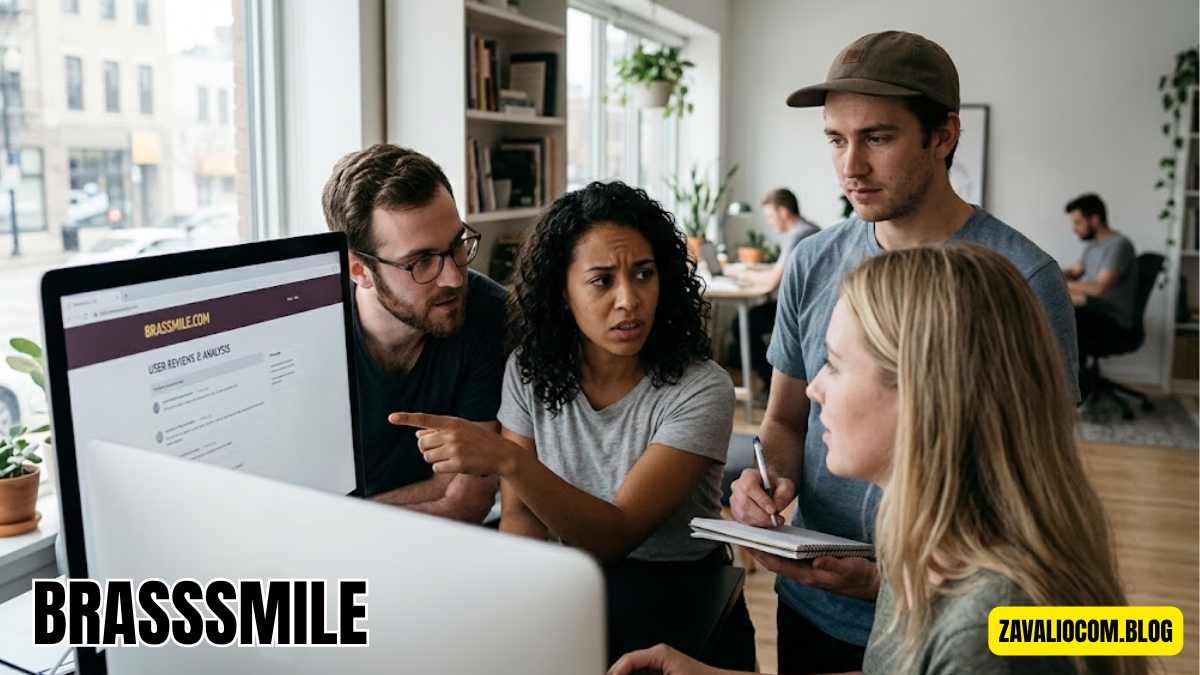
The clearest current interpretation is BrassSmile.com, a multi-topic informational website publishing articles across business, education, finance, health, insurance, technology, travel, and related subjects. Recent independent reviews of the active site consistently describe it as a general publishing platform rather than a dental clinic, whitening company, orthodontic service, or online store.
That distinction is the starting point for understanding the site, but it is not the only thing worth knowing. The more useful questions are what the website actually publishes, how trustworthy its articles are, why dentistry keeps getting associated with the name, and when readers should verify information somewhere else.
What brasssmile actually is in 2026
BrassSmile.com works much more like an online magazine than a traditional company website.
Instead of presenting a single service or product, the platform organizes articles into broad categories. Recent reviews of its public pages identify seven major navigation areas: Business, Education, Finance, Health, Insurance, Technology, and Travel. Its wider archive has also included material touching law, gaming, home topics, and other general-interest subjects.
The website also appears to have been around for longer than some of the newer sites using similar names. Third-party domain records list the registration date for BrassSmile.com as March 5, 2023.
What matters more than the age of the domain, though, is how it operates today. Visitors appear to land primarily on individual informational articles through search, then move between categories, tags, recent posts, and older content.
That makes it a content destination rather than a tool. You are not opening an account, booking an appointment, uploading medical records, calculating investments through proprietary software, or purchasing a BrassSmile-branded product. You are mainly reading articles.
What kind of articles will you find there?
The content mix is broad enough that two visitors could use the website for completely different reasons.
Recent material and indexed archives have included topics such as commercial trucking insurance, knowledge management in banking, business verification, car insurance calculations, university applications, clear aligners, law schools, trading, and capital efficiency. New material was still being reported on the site in August 2026.
That variety is both the site’s strength and its biggest limitation.
A broad publishing model works well for discovery. Say you are a small-business owner trying to understand commercial vehicle insurance before talking with an agent. A beginner-friendly article explaining deductibles, liability limits, and premium factors can help you learn enough vocabulary to have a better conversation later.
The same applies to education. A prospective international student might find an article discussing U.S. law schools, then use it as a starting point before checking tuition, admissions requirements, LSAT policies, and international-student rules on the university’s official website.
Technology content follows a similar pattern. General explanations can be useful if you want to understand an unfamiliar platform or digital concept without reading 40 pages of technical documentation.
The mistake would be expecting every article on a multi-topic publication to provide specialist-level depth.
Why do so many people think it is a dental website?
The name practically invites the assumption.
Put the word “smile” into a brand name and most people immediately think about teeth, braces, whitening, veneers, orthodontics, or cosmetic dentistry. Search results have reinforced that connection because several unrelated websites and articles describe the term as though it were a dental philosophy, treatment system, whitening concept, or oral-care brand.
There is a real problem with that interpretation: available evidence does not establish the name itself as a recognized clinical procedure.
Some pages connect the term with legitimate treatments such as clear aligners, implants, veneers, braces, teeth whitening, and preventive dentistry. Those treatments obviously exist. Their existence does not mean a separate standardized dental treatment carrying this particular name exists.
BrassSmile com can publish dental articles because health is part of its content mix. That is very different from being a dental practice.
Think of it the same way you would treat a large lifestyle magazine publishing an article about Invisalign. The article may be informative, but the magazine does not suddenly become an orthodontist.
Is the information on BrassSmile.com reliable?
I would judge it article by article rather than giving the entire domain a simple “trustworthy” or “untrustworthy” label.
That is the sensible approach for almost any general-interest publication.
Start by checking who wrote the article. Recent reviews have identified visible contributors including Devin Haney, Shivi Hyde, and account-style author names associated with the site. Look for an actual author biography when one is available and see whether the writer has relevant expertise for the subject.
Next, check the publication date. A basic explanation of a timeless concept can remain useful for years. An article about insurance rules, software features, university requirements, taxes, investment products, or travel restrictions can become outdated much faster.
Then look at the sources.
This is where most people evaluate informational sites badly. A polished design, HTTPS padlock, long article, or confident writing style does not prove that the claims are correct. What matters is whether important claims can be traced back to something stronger.
For health topics, that might mean the American Dental Association, CDC, FDA, peer-reviewed research, or a licensed provider. Financial information may need confirmation through the SEC, IRS, CFPB, state regulators, or the financial institution involved.
Where the site can genuinely be useful
The platform makes the most sense as a first-stage research tool.
Suppose you have never purchased auto insurance yourself. An introductory article explaining that premiums can be affected by driving history, vehicle type, ZIP code, coverage limits, and deductible choices can help you understand what an insurer is asking.
You might learn why choosing a $1,000 deductible produces a different risk calculation than choosing a $500 deductible.
What the article cannot tell you reliably is exactly what you personally will pay next month. Insurance pricing depends on the carrier, state, driver profile, discounts, vehicle, credit-related rules where permitted, and many other variables.
Health articles should be handled with even more caution. A general guide can explain how clear aligners move teeth. It cannot examine your bite, evaluate bone health, take X-rays, diagnose periodontal disease, or determine whether orthodontic movement is appropriate for you.
This distinction — learning versus deciding — is probably the best way to use the website.
Use general articles to understand the subject. Use primary sources and qualified professionals to make important decisions.
Be careful with similarly named Brass Smile websites
One reason this topic has become so confusing is that BrassSmile.com is not the only domain using a nearly identical name.
Search results currently contain other properties such as BrassSmile.media, Brasssmile.org, Brasssmiles.org, and additional similarly branded domains. They do not necessarily belong to the same organization. One may focus on general articles, another on luxury lifestyle material, and another may present dental-focused information.
Never assume two websites are connected just because their names look nearly identical.
Check the full domain in your browser’s address bar. Then look for an About page, contact details, ownership information, editorial policies, privacy documentation, and consistent branding.
This takes maybe 30 seconds and can prevent a lot of confusion.
Is BrassSmile.com safe to browse?
There are two different meanings of “safe” that often get mixed together.
The first is technical safety: does the site use a secure connection, and are there obvious signs of malicious behavior?
The second is informational safety: should you act on what an article says?
Those are not the same thing.
HTTPS can encrypt information moving between your browser and a website, but the padlock does not fact-check an article. A perfectly secure website can still publish an inaccurate insurance explanation or an outdated medical claim.
For ordinary reading, the website functions as a conventional public content platform. For anything involving financial accounts, medical information, identification documents, payments, or other sensitive data, I would expect a much higher level of transparency before entering personal information.
That rule applies far beyond this particular site.
Who will get the most value from it?
The strongest audience is probably casual readers who want a clear introduction before moving into deeper research.
Students can use general explainers to learn terminology. Small-business owners may find introductory business and insurance material useful. Consumers researching technology, health procedures, financial concepts, or travel questions can use an article to understand the basics before visiting authoritative sources.
Researchers looking for academic evidence are different.
If you are writing a university paper, making a major investment, choosing health treatment, interpreting an insurance contract, or making a legal decision, a broad content site should not be your final citation.
Treat it as the beginning of the search, not the end.
FAQs
What is BrassSmile.com used for?
It is primarily used for reading general informational articles. The site’s published categories include business, education, finance, health, insurance, technology, and travel rather than one single specialist subject.
Is BrassSmile.com actually a dentist?
No evidence from the current main website indicates that it operates as a dental clinic. Dental and clear-aligner content can appear in its health coverage, but readers should use licensed dentists or orthodontists for diagnosis and treatment decisions.
Do I need an account to read the website?
Publicly reviewed pages appear to be accessible without a paid membership or required reader account. That makes the platform closer to a traditional open-access blog or digital magazine than a subscription service.
Why are there different Brass Smile websites on Google?
Several independently operated domains use similar wording, and they can cover completely different subjects. Always check the exact domain rather than assuming BrassSmile.com, BrassSmile.media, Brasssmile.org, and other variations represent the same organization.
Can I trust its health or financial advice?
Use it for background information, not as your only source for high-stakes decisions. Verify health claims with qualified clinicians or authoritative medical sources and confirm financial, insurance, legal, and education information with the relevant official organization.
The site makes more sense once you ignore what its unusual name seems to imply. It is best viewed as a broad informational publication: potentially useful for discovering subjects and learning the basics, but not automatically an authority on every category it covers. Read the individual article, inspect its evidence, and verify anything that could affect your health, money, education, or legal rights.